Are you experiencing fatigue, low mood, muscle weakness, frequent illness, hairloss, bone loss, stubborn weight gain, poor sleep, or brain fog—even though your doctor says your blood work looks normal?
You are not alone.
One of the most overlooked reasons people continue to struggle with these symptoms is that standard blood testing may not always provide the full picture when it comes to vitamin D status and overall nutrient health.
Many people search online for:
These are important questions because vitamin D affects far more than just your bone health.
In my practice, I frequently see patients whose standard (static) vitamin D blood level appears acceptable, yet they continue to experience many classic vitamin D deficiency symptoms. In many cases, the problem is not simply the amount of vitamin D circulating in the bloodstream. The issue may be whether the body can properly utilize that vitamin D at the cellular level.
Vitamin D receptors are found throughout your body, which means vitamin D influences numerous systems and functions.
Some of the most common vitamin D deficiency symptoms include:
Many people experience several of these symptoms at the same time and never realize that nutrient deficiencies may be contributing.
Most conventional testing measures a single vitamin D marker in the bloodstream. It is called a “static” test.
While this can be useful, it is essentially a snapshot in time.
Think of it like checking how much money is sitting in your bank account without knowing whether you can actually access it, spend it, or use it effectively.
The body’s ability to absorb, transport, activate, and utilize vitamin D depends on numerous other nutrients working together.
If these supporting nutrients are low, vitamin D may not function optimally even when blood levels appear “normal.”
This is one reason some people continue to experience vitamin D deficiency symptoms despite taking supplements.
Vitamin D does not work alone.
Several nutrients are involved in vitamin D activation, transport, and utilization.
These include:
Magnesium is required for the enzymes that activate vitamin D.
Without adequate magnesium, the body may struggle to properly utilize vitamin D.
Low magnesium may contribute to:
Vitamin K helps direct calcium into bones and teeth where it belongs.
Vitamin D increases calcium absorption, while vitamin K helps guide that calcium appropriately.
An imbalance between these nutrients may affect cardiovascular and bone health.
Zinc plays an important role in immune function and vitamin D receptor activity.
Low zinc levels may contribute to:
Vitamin D helps regulate calcium absorption and utilization.
Low cellular calcium levels may affect:
Many additional vitamins, minerals, antioxidants, and amino acids influence how effectively the body uses vitamin D and maintains overall health.
This is why looking at a single vitamin D number often does not provide enough information.
One of the biggest limitations of standard blood testing is that it often measures what is circulating in the blood at that moment.
However, nutrients perform their work inside the cells.
A person can sometimes have normal blood levels while cellular stores are less than optimal.
This is where comprehensive micronutrient testing can be extremely valuable.
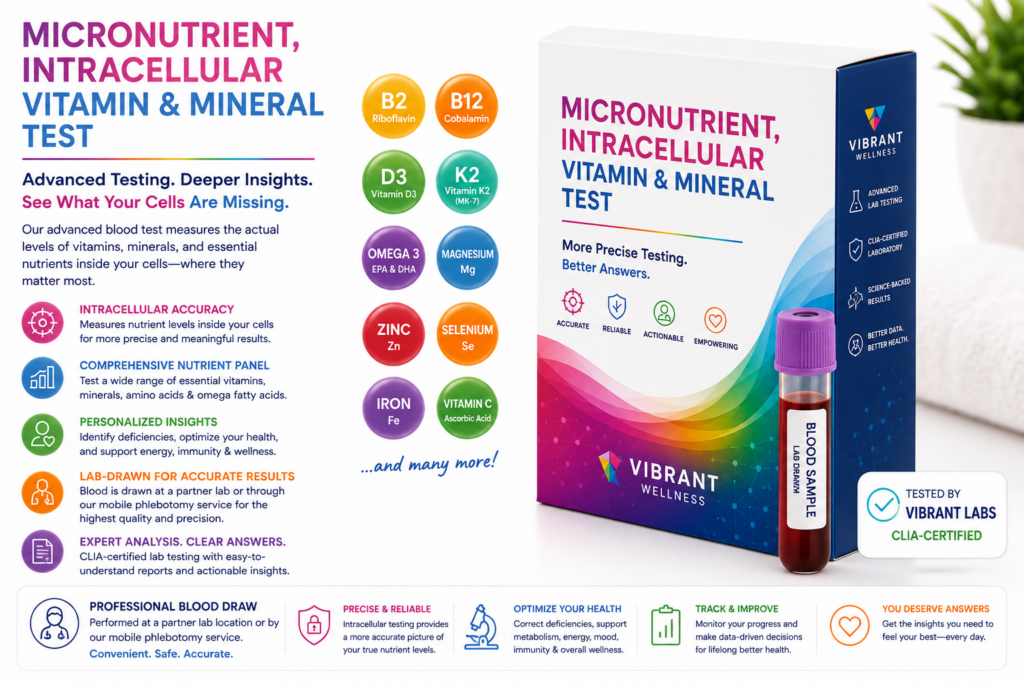
The Micronutrient Test evaluates vitamins, minerals, antioxidants, amino acids, and other essential nutrients at the cellular level.
Instead of focusing on just one nutrient, it helps identify patterns and deficiencies that may be affecting energy, metabolism, immune function, recovery, cognition, and overall wellness.
When evaluating vitamin D deficiency symptoms, I often find it helpful to look beyond vitamin D alone and assess the broader nutrient picture.
When your vitamin D levels are optimized—and your body has the supporting nutrients needed to utilize it properly—you may notice improvements in how you feel.
Potential benefits of healthy vitamin D status include:
Vitamin D supports cellular function and may contribute to improved energy production.
Vitamin D plays an important role in your immune regulation and resilience.
Research continues to explore vitamin D’s relationship with mood, emotional wellness, and cognitive function.
Healthy vitamin D levels help support muscle strength, recovery, and physical performance.
Vitamin D assists with calcium absorption and supports bone integrity throughout life.
Vitamin D receptors are found within the cardiovascular system, highlighting its importance beyond bone health alone.
Many individuals report improvements in focus, clarity, and mental performance when nutrient deficiencies are corrected.
Maintaining appropriate vitamin D levels may support overall wellness and quality of life as we age.
One important point that is often overlooked is that your vitamin D should not be too low—but it also should not be excessively high.
Optimal health is about balance.
Taking large amounts of vitamin D without evaluating other nutrient levels may not always produce the desired results.
This is why a personalized approach can be helpful.
Understanding vitamin D alongside magnesium, zinc, calcium, vitamin K, antioxidants, and other nutrients allows for a more complete picture of what your body may need.
If you have persistent fatigue, brain fog, low mood, poor recovery, frequent illness, muscle weakness, or other vitamin D deficiency symptoms, it may be worth looking beyond a standard vitamin D blood test.
A single vitamin D number can provide useful information, but it does not always tell the entire story.
Evaluating nutrient health at the cellular level may uncover additional imbalances that affect how your body produces energy, supports immunity, maintains metabolism, and utilizes vitamin D effectively.
Sometimes the missing piece is not simply more vitamin D—it is understanding the complete nutrient picture.
Our comprehensive Micronutrient Test evaluates cellular levels of vitamins, minerals, antioxidants, amino acids, and other key nutrients that work together to support energy, immune function, metabolism, cognitive health, and overall wellness.
By looking deeper than a standard blood panel, you can gain a better understanding of what your body may truly need to function at its best.
Your liver plays a critical role in your metabolism, fat storage, detoxification, hormone processing, and nutrient storage.
When liver function becomes stressed individuals may experience:
Comprehensive blood testing often includes markers that help evaluate liver health and function.