Many women just like you, struggle with fatigue, weight gain, poor sleep, mood swings, low libido, hair thinning, brain fog, and memory concerns for years before discovering hormones may be playing a role.
One of the most frustrating things I hear from women is:
“My blood work was normal, but I still don’t feel like myself.”
The truth is that hormone imbalance symptoms can occur even when traditional blood testing appears normal.
This is one reason saliva hormone testing has become increasingly popular among women seeking a deeper understanding of how their hormones may be affecting their daily life.
Your hormones influence nearly every system in the body.
They affect:
When hormones become imbalanced, symptoms can develop gradually over months or years.
Many women assume they are simply getting older, under stress, or experiencing normal menopause when hormones may actually be contributing to how they feel.
Blood testing measures hormones circulating in the bloodstream at the moment your sample is collected.
Saliva testing measures the free, bioavailable portion of hormones that can move into tissues and interact with hormone receptors throughout the body.
Many practitioners who utilize saliva testing say that this can provide valuable information about the hormones that are actually available to cells.
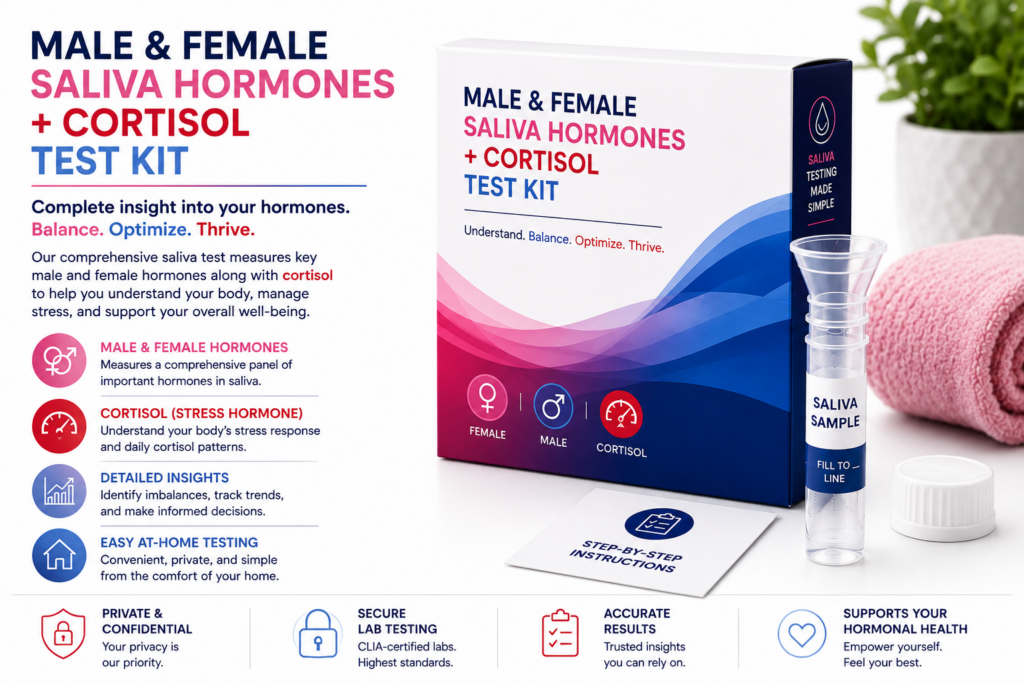
Saliva testing is also convenient because it can be performed at home without a blood draw. It is simple, and convenient for you to collect a hormone saliva test.
One pattern I frequently see is a woman whose blood hormone levels appear acceptable, yet their saliva hormone levels are significantly lower.
In these situations, their symptoms may include:
This may indicate that adequate hormones are circulating in the bloodstream, but less hormone is actually reaching tissues where it is needed.
For some women, this helps explain why they feel symptomatic despite having “normal” blood work.
The opposite pattern can also occur.
Some women have elevated saliva hormone levels while blood testing appears normal.
This does not always mean the body is balanced.
In some cases, higher saliva levels may reflect hormone accumulation within tissues or fat cells.
Potential contributing factors may include:
Because estrogen and other hormones can be stored within fat tissue, saliva testing may provide clues that blood testing alone may not reveal.
Estrogen supports brain function, mental clarity, skin health, bone health, cardiovascular health, and vaginal tissue health.
Low estrogen symptoms may include:
Higher estrogen levels may contribute to:
Progesterone is often called the calming hormone or a natural anti depressant.
Low progesterone may contribute to:
While less common, higher progesterone levels may contribute to:
Women need testosterone too.
Low testosterone may contribute to:
Elevated testosterone levels in women may contribute to:
Women may begin noticing:
Perimenopause often begins during this decade.
Symptoms commonly include:
Many women experience:
Hormones continue to influence health well beyond menopause.
Women in their 60s, 70s, and even 80s may experience symptoms related to hormone balance including:
Although this is not primarily a cortisol article, cortisol plays an important role in hormone balance.
Chronic stress can influence estrogen, progesterone, testosterone, sleep quality, energy production, metabolism, and overall well-being.
For women experiencing significant fatigue, stress, burnout, or sleep issues, cortisol testing may provide additional, helpful information
At-home saliva testing offers several advantages:
For women experiencing hormone imbalance symptoms, saliva testing may help uncover patterns that traditional testing overlooks.
Hormone imbalance symptoms can affect women in their 30s, 40s, 50s, 60s, 70s, and beyond.
Whether symptoms involve fatigue, weight gain, poor sleep, low libido, brain fog, hair thinning, mood changes, or memory concerns, your hormones deserve consideration.
While blood testing can be helpful, it does not always provide the complete picture.
Saliva testing offers another way to evaluate hormone balance and may help explain why some women continue to experience symptoms despite being told everything looks normal.
Understanding your hormones is often the first step toward understanding how to feel like yourself again.